Reading Truck Tire Upgrades
Before buying lift kits and truck accessories in Reading, choose between a leveling kit and a complete suspension lift. A leveling kit corrects factory rake while preserving daily manners, and a suspension lift adds clearance, wheel travel, and larger tire fitment. Collect precise year, trim, drivetrain, and suspension details to confirm Rough Country fit. Budget for tires, alignment, and accessories like steps, lights, or liners—you'll understand how the ideal setup comes together.
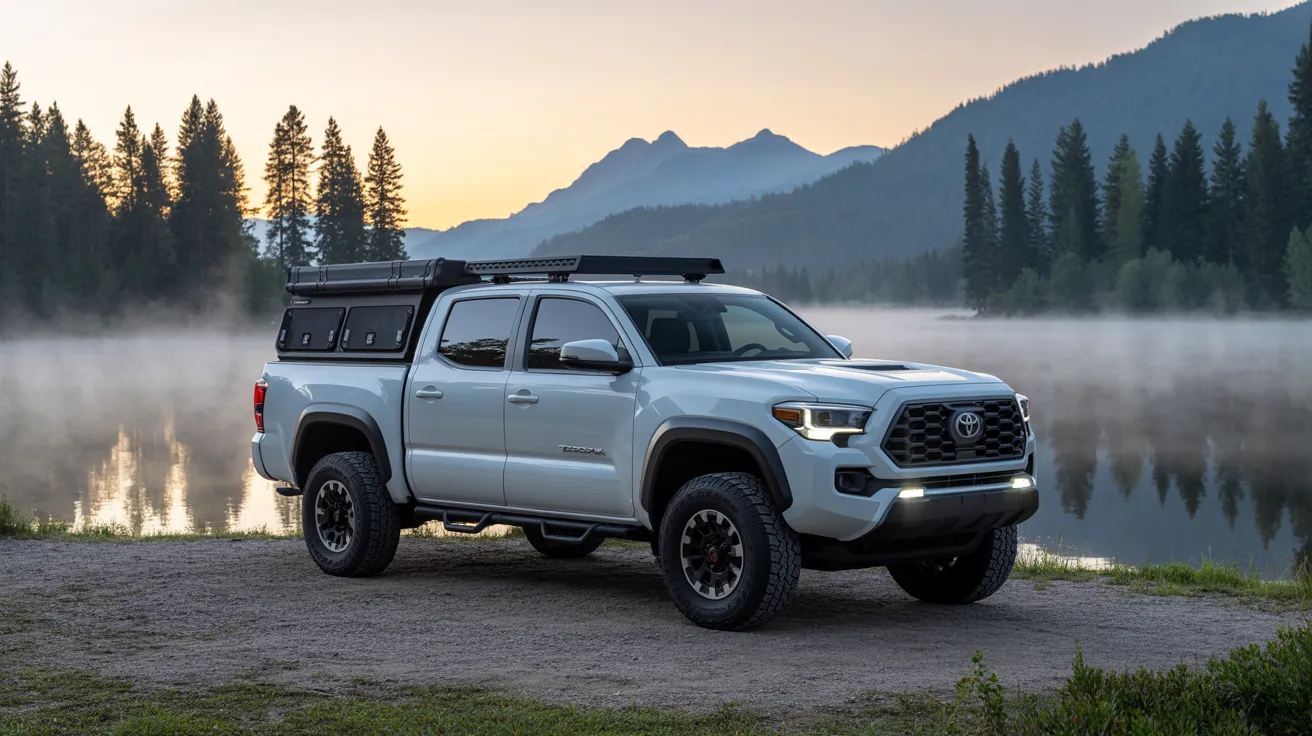
Main Points
- Select a leveling kit to remove factory rake while preserving near-stock performance and allowing slightly larger tires for daily commuting.
- Choose a suspension lift kit for added ground clearance, wheel travel, and off-road performance, recognizing that handling and steering may change.
- Verify exact fitment using your truck's year, model, make, drivetrain, trim, cab, bed, and suspension configuration before ordering Rough Country parts.
- Pair lift height and shocks to your driving needs, whether commuting, doing trail work, towing, or serious off-road travel.
- Plan your budget for beyond the kit price, accounting for alignment, labor, wheels, tires, shocks, and supporting accessories like steps, lights, and liners.
Suspension Lift Kits Against Leveling Kits
Since both upgrades change your truck's appearance, leveling kits and suspension lift kits resolve different issues and deliver different results. A leveling upgrade generally raises the front to match the rear, addressing factory rake with little change to geometry, ride height, and daily drivability. You go with one when you want a cleaner appearance and room for slightly larger tires.
A suspension lift elevates the entire truck and changes critical parts to provide more ground clearance and wheel travel. You'll notice bigger gains in ride height, off-road capability, and tire fitment, yet you will expect handling tradeoffs, steering changes, and a higher center of gravity. When you want mild visual correction, level it. When you need real clearance and articulation, lift it and plan the supporting mods tailored to your use case.
Find the Rough Country lift kit that fits your truck.
Start by gathering your truck's year, brand, and model, transmission type, and your primary use case, since Rough Country creates lift kits based on precise geometric specifications and performance objectives. This baseline shows you which brackets, struts, spacers, crossmembers, and hardware will fit without clearance or alignment issues.
Next, verify OEM ride height, cabin and bed configuration, axle configuration, and if your truck uses 2WD, 4WD, or adaptive suspension. Rough Country compatibility resources make this easy, but you still need to validate fitment accuracy against configuration-specific components and factory package variations. A kit that fits a Silverado 1500 may not fit a Trail Boss, and a Ram with pneumatic suspension needs different adjustments than a vehicle with coil springs. After verifying exact fitment, you prevent install surprises, parts conflicts, and return hassles.
Find the Rough Country lift kit that fits your driving habits.
Pair the kit to your driving patterns, and you'll achieve enhanced ride quality, longevity, and tire clearance without spending on unused features. If you primarily commute in your truck, pick a basic Rough Country leveling kit or a 2 to 3.5 inch suspension setup tuned for daily comfort and predictable steering geometry.
If your truck sees both pavement and trail time, step up to a suspension upgrade with premium shocks and corrected arm angles. You'll gain better trail handling, better articulation, and room for larger tires without straining stock components. For heavy trail driving, focus on elevated struts, N3 and Vertex dampers, and kits that maintain driveline angles under compression. The right Rough Country package needs to match cargo load, speed, and terrain, and how much ride firmness you'll actually tolerate.
Best Rough Country Truck Accessories
Enhance your suspension upgrade with Rough Country accessories that address the genuine problems you'll encounter after lifting and upgrading tires. Begin with upgraded steps or rock sliders, which regain ease of cabin entry and add side protection now that your truck sits article higher and broader.
Next, prioritize
How Much Budget Do You Need for Your Build?
After selecting the suspension lift and added components, allocate a budget above the base price. You'll require money for shock units, wheels, tire options, alignment, work costs, and any drivetrain or steering corrections your vehicle type demands. Brand reputation matters; premium systems usually offer stricter specs, better ride quality, and fewer install headaches.
Regarding realistic cost projections, expect entry-level spacer or leveling setups to start at lower prices, while comprehensive suspension packages with control arms, tuned dampers, and bigger tires increase fast. Install complexity, shop rates, and calibration services may contribute significantly. You ought to budget supporting upgrades like gear changes, brake components, and recovery gear if you're building for trail use. If cash flow matters, compare financing options meticulously and emphasize consistency over flashy add-ons.
Popular Questions About Lifts
Will Lift Kits Change My Factory Warranty?
Yes, lift kits can affect your original warranty, but they won't automatically cancel it. You encounter warranty issues if the dealer demonstrates the suspension modification caused or was involved in a malfunction. Powertrain, steering, suspension, and drivetrain claims often spark dealer disagreements. You ought to maintain installation records, use quality components, and follow service intervals. That allows you to challenge rejected claims and maintain protection where the modification didn't cause the problem.
Will Larger Tires Need Re-Gearing?
Yes—should you leap several tire sizes, you'll typically need gear changes. For example, when you move from 31s to 35s, your truck may feel slow, shift improperly, and put strain on the drivetrain under load. Re-gearing reestablishes effective gear ratios, helping you restore acceleration, towing power, and transmission response. You may skip it for modest tire increases, however, if power, fuel economy, or shift quality drop, it's usually the right call.
When Should You Check Your Lift Kit?
You should inspect suspension components following the initial 500 miles, next at every oil change or 3,000 to 5,000 miles, based on use. Regular checks allow you to catch bushing wear, shock leaks, bracket damage, and alignment issues early. Check Fastener torque following aggressive off-road driving, hauling, or collisions. If you drive in mud, salt, or rough terrain often, shorten intervals and inspect steering and suspension parts more frequently.
Will a suspension kit change towing or payload capacity?
Yes, a lift kit can shift your towing and payload capacity. When you boost ground clearance for improved clearance, you adjust suspension setup, center of gravity, and leverage on components. That can reduce stability under load and increase drivetrain stress, mainly with larger tires. You should follow your maker's specs unless an engineered kit specifically documents modified ratings. Proper alignment, gear selection, and braking operation matter too.
Is Alignment Service essential once you add truck upgrades?
Yes—if components alter ride height, suspension geometry, steering geometry, or tire width, you should get an alignment service. You'll notice the impact fast: slight changes can make your truck drift off-center, scrub tread, and worsen handling characteristics. A full alignment brings back camber setting, caster setting, and toe setting to spec. After certain installs, you could also benefit from brake calibration for driver-assist accuracy. You protect tire life, steering precision, and genuine safety by checking alignment immediately.
Final Thoughts
Determining the best suspension system and upgrades comes down to how you use your truck, your aesthetic choice, and your available funds. When you connect a Rough Country lift kit alongside your driving preferences, you'll gain strength, elevation, and visual appeal which synchronize as smoothly as a fine-tuned transmission. Add intelligent add-ons, plan your spend carefully, and you'll construct a truck that's practical on the road, competent outdoors, and positioned for upcoming challenges.